One moment.
The Journal
Notes from the bench.
Plant profiles, field notes, and essays from the nursery — written by Al at the bench in San Marcos.
19 entries·Updated July 28, 2025
More from the bench.
18 entries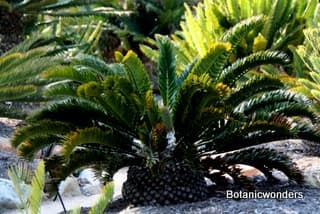
July 28, 2025·1 min
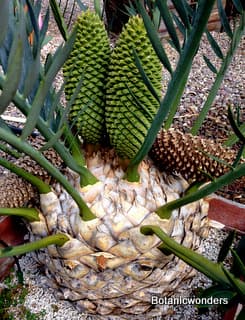
Encephalartos latifrons
Encephalartos latifrons is arguably one of the most stunning of all cycad species. This species originates from South Africa, the Eastern Cape area. The trunk can attain height of about 10 feet, however this will take many years! Encephalartos latifrons is a sought after species by collectors. Unfortunately this has led to near extinction of [...]
Read →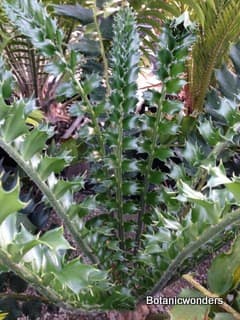
July 28, 2025·2 min
Encephalartos ferox
Encephalartos ferox is a beautiful ornamental cycad. This species of Encephalartos originates from the coastlines of South Africa. Most plants are found growing in part to full sun. Their native environment is very hot and humid. Most plants grow in well draining, sandy soil. The leaves of Encephalartos ferox are very prickly, and shaped like [...]
Read →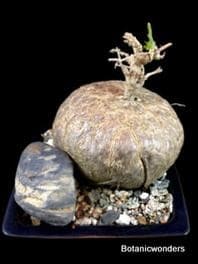
July 28, 2025·1 min
Gerrardanthus macrorrhizus
Gerrardanthus macrorrhizus is one of the best caudiciforms of the cucurbit family I have personally grown. Gerrandanthus macrorrhizus is indigenous to South Africa, where it can grow to an extremely large size. The caudex grows above ground where it can two to three feet in diameter. I have seen plants planted in raised beds that [...]
Read →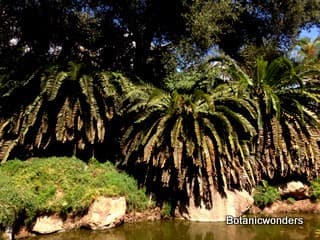
July 28, 2025·2 min
Encephalartos woodii
Encephalartos woodii is truly one of the most enigmatic plants ever discovered. Only one plant has ever been found! The original plants for found in Africa by John Medley Wood, who this species is named after. The original plant was eventually removed from habitat piece by piece. Eleven offsets and trunks were removed and relocated. [...]
Read →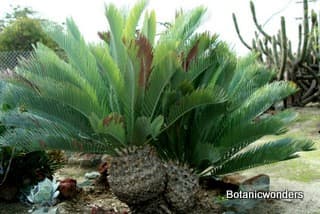
July 28, 2025·1 min
Encephalartos princeps
Encephalartos princeps is one of the most beautiful blue cycads one can grow. Encephalartos princeps native habitat is in South Africa, found in several locations. It can grow up to 20 feet tall. Main stems produce numerous suckers from the base of the plant. Leaflets tend to grow upward, overlapping in a "V" formation. Overall [...]
Read →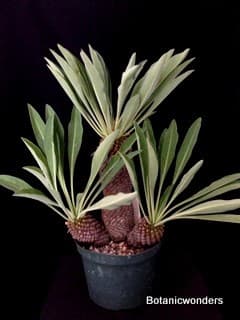
July 28, 2025·2 min
Euphorbia bupleurifolia
Euphorbia bupleurifolia was the second Euphorbia I ever purchased, Euphorbia obesa being the first. It is by far my favorite of all Euphorbia species. It is a found in a large area in South Africa, from eastern Cape Province through Transkei and Natal. It is a small growing plant reaching about 12-16 inches in height, [...]
Read →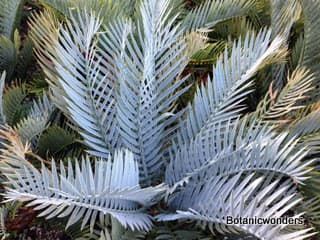
July 28, 2025·2 min
Encephalartos lehmannii
Encephalartos lehmannii is a beautiful blue cycad from the continent of Africa. It has quickly become one of my favorites. The species originates from South Africa, Eastern Cape province. This area is know for its desert like conditions. There is rainfall, however sporadic, and drought is common. Encephalartos lehmannii has beautiful blue leaves which make [...]
Read →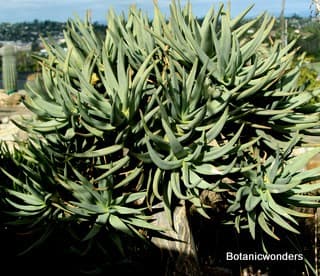
July 28, 2025·2 min
Aloe dichotoma
Of the large tree Aloes, Aloe dichotoma is my favorite. This Aloe is from Southern Africa in region called Namaqualand. It grows in semi-desert and desert areas. In its natural habitat it is often the only tree to be found. It seems to grow mostly on hills and their slopes. It can grow up to [...]
Read →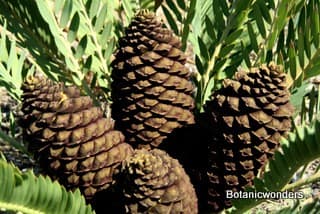
July 28, 2025·1 min
Cycad Cones Their Beauty and Diversity
This page is dedicated to the beauty and diversity of Cycad cones. Cycads are gymnosperms which puts them in the same plant group which includes pine trees. All cycads are dioeceous, which means plants are either male of female, unlike many flowering plants which have booth sex parts on the same flower. They have an [...]
Read →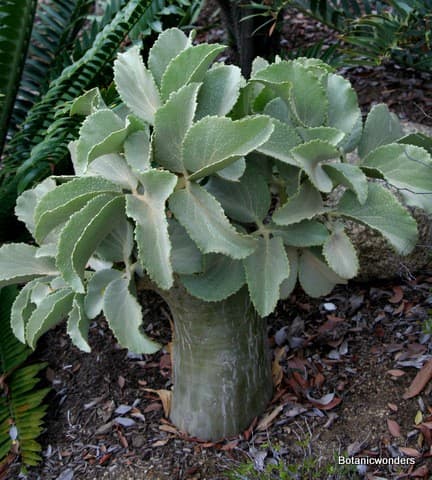
July 25, 2025·2 min
Cyphostemma juttae and Cyphostemma currorii
Cyphostemma juttae and Cyphostemma currorii are both favorites of succulent collectors. The first time I saw Cyphostemma juttae I knew this was a plant I had to have! The fat trunk, peeling bark, and large thick leaves are as exotic as it gets! Cyphostemma juttae and currorii are both from southwest Africa, where they grow [...]
Read →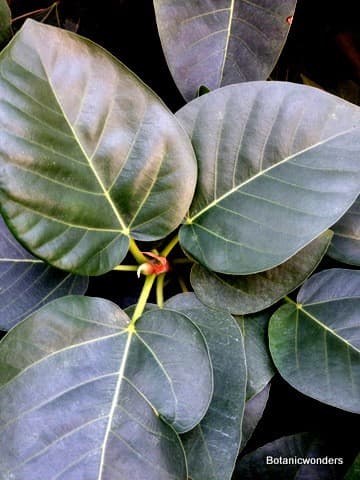
July 25, 2025·1 min
Ficus petiolaris and Ficus palmeri
Ficus petiolaris is another of my favorite caudiciforms. Even at a young age this tree can produce a swollen stem with a lot of character. Ficus palmeri is very similar to F. petiolaris. Some botanists feel that they are just varieties of the same species. In my opinion there is significant difference between the two [...]
Read →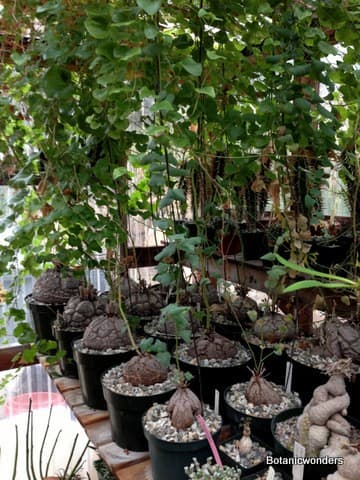
July 25, 2025·2 min
Dioscorea Elephantipes
Dioscorea elephantipes ranks as one of my favorite caudiciforms. I can still remember the first time I was introduced to a similar species, also from the yam family. I had just moved to California, about 1977. I was visiting an indoor plant shop when I was stopped in my tracks. Here was a plant that [...]
Read →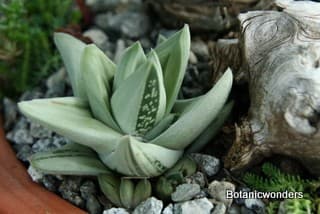
July 25, 2025·1 min
Decorative Planter with Cycad and Succulents
This is a nice decorative planter that is easy to put together, and very low maintenance. First chose a nice glazed bowl, one that works best for your situation. Next is the fun part, choosing the plants. The plants we chose are, a 6" Zamia furfuracea, several different succulents, and sedum ground cover. We also [...]
Read →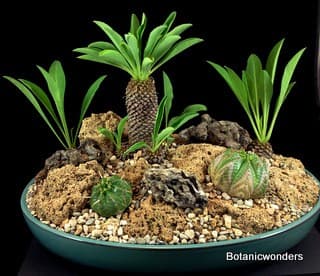
July 25, 2025·2 min
Creating a Succulent Bonsai Scene
In this feature we will demonstrate how to create a succulent bonsai scene. For this project we used Euphorbia bupleurifolia as our main focal point. We chose three plants, one specimen and two smaller plants. The other species was Euphorbia meloformis, which two plants were chosen. Other materials used where travertine rocks, drift wood, and [...]
Read →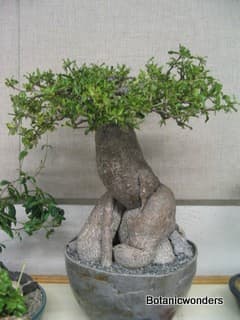
July 25, 2025·2 min
Fockea crispa
Fockea crispa is one of the most famous succulent caudiciforms from a historical perspective. Sometime after 1780 an expedition was led to South Africa, the western cape area to find new and exotic plants for Emperor Joseph ll of Austria. Fockea crispa was one of the exciting new plants discovered. The new plant was potted [...]
Read →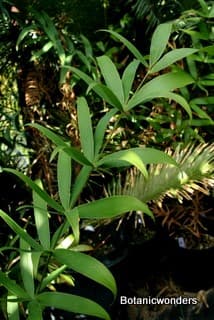
July 25, 2025·1 min
Ceratozamia hildae
Ceratozamia hildae is arguably the most unique species of the genus Ceratozamia, and of cycads in general. It is often referred as the "bamboo cycad". Its upright stems with "multi-grouped" leaflets look very much like a bamboo plant. C. hildae originates from the San Luis Potosi and Queretaro regions of Mexico. It grows in Oak [...]
Read →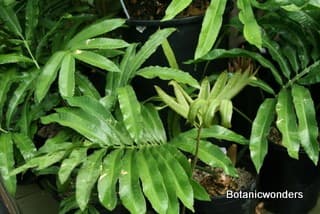
July 25, 2025·1 min
Stangeria eriopus
Stangeria eriopus is a very different looking cycad. So different that when it was first discovered in 1939 it was thought to be a type of fern. S. eriopus originates from South Africa on the eastern cost. There are two distinct forms, one growing in the open grasslands and one growing as an under-story plant [...]
Read →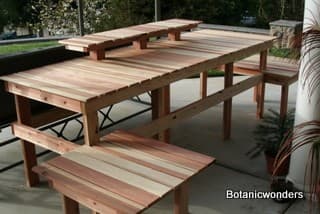
July 22, 2025·1 min
Bonsai Display Table
I had been working on succulent "bonsai" for several days, and soon had a lot of plants and no place to display them. I started looking on the web for design ideas, but could not find anything I really liked, or felt would work for my situation. So I decided to design my own. After [...]
Read →New entries land with the Friday drop.
One drop, one essay, one care supplement — every Friday.