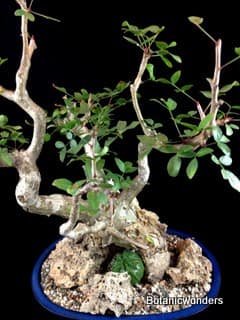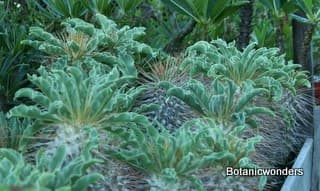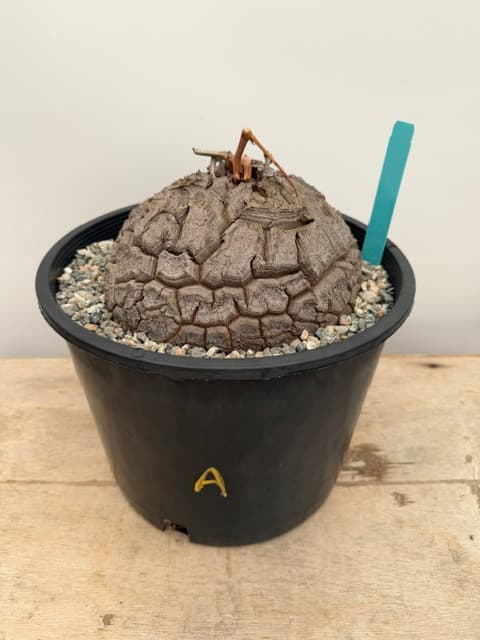
I have grown Dioscorea elephantipes here in San Diego County for thirty years, and the single most useful skill I have ever taught a new owner is how to read the vine. Not the caudex, not the soil moisture meter, not the calendar on the wall. The vine tells you what the plant is doing internally, and it tells you four to six weeks before any other indicator catches up. Get that signal right, and a healthy elephantipes will outlive you. Get it wrong, and you can rot a twenty-year caudex in a single weekend.
Dioscorea elephantipes is one of the few caudiciforms on the bench that runs a Southern Hemisphere clock here in California. It flushes vine in autumn as the days shorten, holds active growth through our cool winter, and goes dormant through the heat of summer. New owners trained on Adenium or Pachypodium get this exactly backwards and water hard in July, which is the surest way to lose the plant. The other Dioscorea on the bench — D. hemicrypta in particular — follow a similar inverted schedule with minor regional variation.
Here is what active growth looks like. The vine is firm to the touch, green or bronze-green at the tips, and putting on visible length week to week. The leaves are heart-shaped, held flat or slightly cupped, and stay turgid through a 24-hour cycle without drooping. Petioles attach at a clean upward angle. In our greenhouse the active phase runs from roughly mid-October through late May, with the strongest extension during the cool, bright weeks of February and March.
The flush mechanic itself is worth understanding before you try to read it. Each season the caudex pushes one or sometimes two primary vines from a small cluster of meristems at the apex. Those vines extend, branch, leaf out, photosynthesize for six to eight months, and then senesce. The caudex does not visibly grow during the active phase the way an Adenium trunk does — it grows during dormancy, drawing on the carbohydrate the vine produced. This is why protecting the dormancy period matters more than maximizing the active period.
When the plant prepares to go dormant, the signals are unmistakable if you are looking for them. The youngest leaves at the vine tips stop expanding. Internodes shorten. The deep green flattens out to a paler, slightly yellow cast across the whole canopy at once — not just one or two leaves, but the entire vine reading one tone lighter than it did the week before. Petioles soften and the leaf angle relaxes downward. In a typical San Diego County summer this begins in the last week of May or the first week of June.
This is your cue to taper, not to stop. Cut watering frequency in half for two weeks. Then in half again. By the time the leaves are fully yellow and dropping — usually mid to late June — you should be at zero water, and you stay at zero through July, August, and September. The vine will brown, dry, and eventually detach on its own. Do not pull it; let it fall. The abscission point tells you the caudex has reabsorbed everything useful.
The common mistake here is panic. A new owner watches one leaf yellow, assumes the plant is in distress, and increases watering to compensate. That single decision is the most expensive mistake in caudiciform horticulture. One yellow leaf is meaningless. Half the canopy yellowing simultaneously over a two-week window is the signal. Watch the canopy as a whole and trust the tone shift, not any individual leaf.
Through dormancy the caudex sits dry and woody. It will look dead. It is not dead. The bark plates may shrink slightly and the surface will feel cooler than the surrounding pot. This is correct. Resist every impulse to mist, soak, or check the soil. The single most common phone call we get in August is from an owner who watered a dormant elephantipes just to be safe and is now watching a soft spot spread across the apex. Once that rot establishes — typically four days from the unwanted watering — there is almost nothing you can do.
The reverse signal, when to start watering again, is even cleaner than the dormancy signal. Look at the apex of the caudex, where the old vine attached. Sometime between mid-September and mid-October, depending on the year, you will see a pale pink-bronze tip emerge from the meristem. It looks like a small asparagus spear. That is your trigger. Water once, lightly — maybe a third of what a full watering would be. Wait two weeks. Water again, slightly more. By the third watering, two to three weeks after that, you can be back on full schedule.
The full schedule for active Dioscorea elephantipes in our climate is a deep soak every seven to ten days, with the pot draining completely between waterings. We use a 60/40 mix of coarse pumice and aged coir, in a clay pot one size larger than the caudex diameter. Light is bright filtered — east-facing morning sun is ideal, with shade from the worst of midday. Temperature range 50°F to 85°F suits the plant; sustained heat above 95°F will push it into dormancy whether you want it or not, which is one reason inland growers see earlier dormancy than coastal growers.
Soil chemistry matters less than soil structure. The plant tolerates a wide pH range and is not a heavy feeder. What it cannot tolerate is a mix that holds water around the caudex for more than 48 hours. If you are growing in a heavier mix and cannot repot immediately, lift the caudex slightly above the soil line so the lower third sits in mix and the upper two-thirds is exposed. This is the traditional grow-on style and is more forgiving of watering errors.
Repotting is best done in the first weeks of the active season, after the new flush has hardened off and the plant is putting on visible vine length — usually late October. Do not repot a dormant caudex. The roots are inactive, any damage will not heal until the plant resumes growth, and you have created a six-month window for pathogens. Wash the root mass under a tap, prune any black or hollow root material with sterilized scissors, let the caudex air-dry on the bench for 48 hours, then pot up dry. Wait one full week before the first watering.
A note on cold tolerance. Dioscorea elephantipes is rated USDA 9b through 11, but the published range assumes a dry, dormant plant. A wet caudex at 38°F is at risk of rot regardless of zone. Through our occasional San Diego County cold snaps in January and February, we move the plants into the propagation house and hold the temperature above 50°F. If you grow outdoors year-round, plan to bring the plant under cover when nighttime lows are forecast below 45°F.
What to watch for. The failure modes are few and consistent. Soft, dark patches on the caudex apex, almost always traceable to watering during dormancy or to water pooling between bark plates after an overhead spray — the fix is to immediately stop watering, move the plant to maximum airflow, and surgically remove the affected tissue with a sterilized blade if it has not yet spread. A vine that emerges in spring instead of fall, which usually means a young plant that has not yet locked into the Southern Hemisphere clock; let it run its course and it will normalize within two seasons. A caudex that shrinks visibly through dormancy, which is normal and expected — it should plump back up within three weeks of the autumn flush. A vine that emerges, extends six inches, and then desiccates, which usually means the active-season watering is too light or the light too low.
If you are coming to Dioscorea from a faster-growing genus, the hardest adjustment is the patience. A 6-inch caudex in a 5-gallon pot may not visibly grow for two seasons before it suddenly puts on a half-inch year. The plant is working on a different timescale than you are. Read the flush, respect the dormancy, and keep your hands off the watering can in summer. Done correctly, this is a fifty-year plant. Done badly, it is a two-summer plant.

Al
Founder, Botanic Wonders. Thirty years growing rare and specimen plants in northern San Diego County.