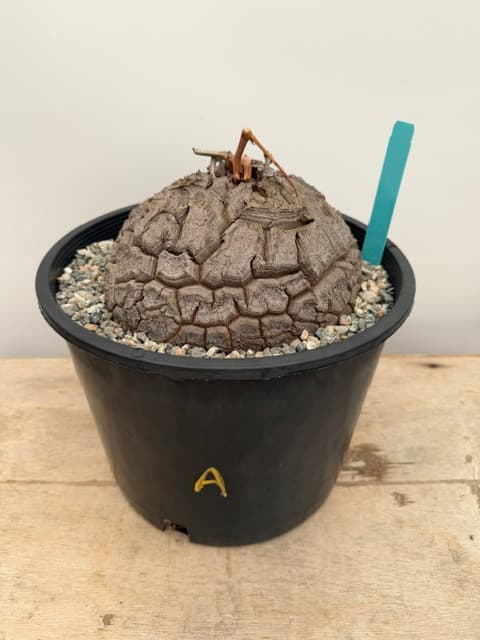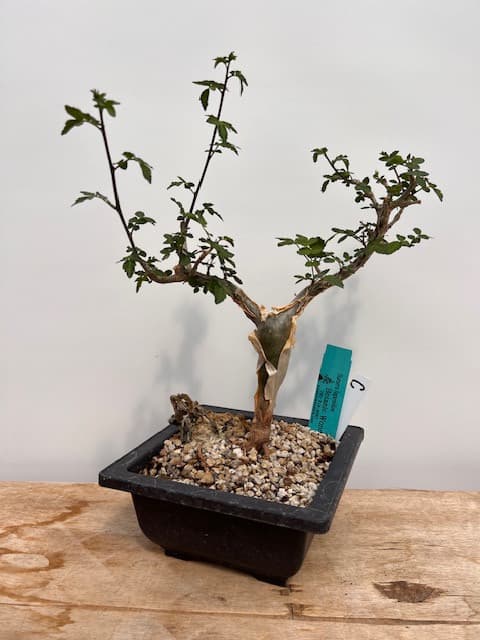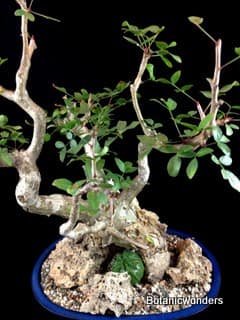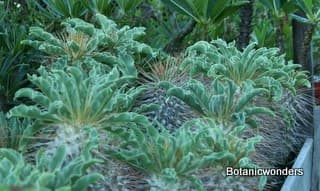
Of every genus we grow here, Pachypodium is the one that kills the most first-time caudex owners. Not because it is particularly demanding day to day — a healthy specimen asks very little — but because the failure modes are silent, fast, and almost always traceable to a single misjudgment about water. After thirty years on the bench with this genus I have seen every version of the same accident, and I have written this guide so you can avoid the most common ones.
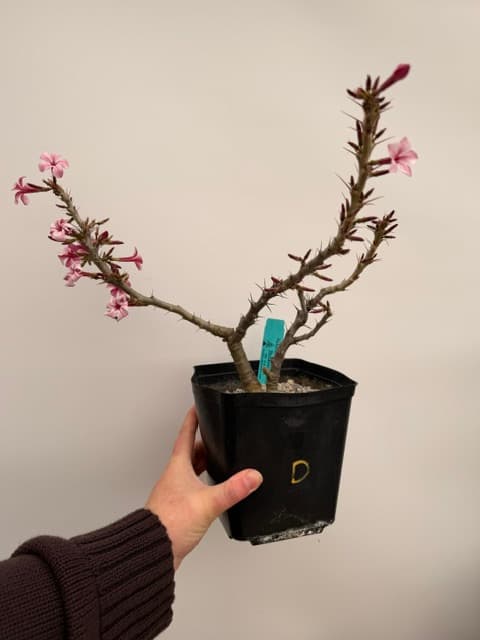
The genus contains roughly twenty-five species split between Madagascar and southern Africa, and the two regions follow different dormancy schedules. The Madagascan species — P. lamerei, P. rosulatum, P. baronii — are summer growers that drop leaves and rest in winter. The southern African species — P. succulentum, P. bispinosum, P. namaquanum — are the trickier group, with a much sharper dormancy and a pronounced sensitivity to summer overwatering. The hybrid P. succulentum × bispinosum that we have on the bench in 6-inch Pot D follows the southern African schedule and is the species I am writing about most directly here.
Soil mix first, because almost everything else depends on it. Our standard for caudiciform Pachypodium is 50 percent coarse pumice, 30 percent aged coarse coir, and 20 percent coarse builder's sand. The pumice is non-negotiable. Perlite is too light, breaks down within a season, and floats to the surface every time you water — within a year you have a layer of perlite on top and a layer of coir at the bottom and the structural function is gone. We buy our pumice in 1/4-inch grade by the pallet and screen it once before potting.
The 30 percent coir is what gives the mix enough water-holding capacity to support the fine root hairs through active growth without staying wet. Aged coir, not fresh — fresh coir holds salts and can shock new roots. We open a bale, water it through, drain it, and let it sit covered for a week before mixing. The 20 percent coarse sand at the bottom of the pot keeps the drainage column open. If you cannot source coarse builder's sand, decomposed granite at 1/8-inch grade is an acceptable substitute.
Light requirements are simple but absolute. Full sun, all day, with one exception — inland growers in the 100°F-plus summer zone should provide afternoon shade from roughly 14:00 onward to prevent caudex sunscald on younger plants. At the nursery we run them in full sun year-round and the plants color up beautifully. Less than full sun and the caudex stretches, the spines lengthen and weaken, and the plant becomes structurally fragile. There is no Pachypodium that thrives in low light. If your space cannot provide six hours of direct sun, choose a different genus.
Watering schedule for active growth, southern African species in our climate. Active growth runs from roughly mid-March, signaled by the first leaf emergence, through late September. During this window we water deeply, by flooding the pot until water runs clear from the drainage hole, then waiting until the mix is bone-dry before watering again. In our greenhouse that interval is roughly 10 days in March and April, 7 days in May through August, and stretches back out to 10 days in September as the plant prepares for dormancy.
Now the part that kills plants — the three weeks of summer when overwatering does its worst damage. In our climate this window runs from roughly the second week of June through the first week of July, when daytime highs sit consistently above 85°F and humidity drops below 40 percent. The plant is in active growth and looks like it should be drinking heavily. The mix dries fast in the heat and looks like it needs watering more often than the schedule suggests. New owners respond by increasing frequency, sometimes to every three or four days.
What is actually happening underground is that the fine feeder roots are partially shutting down in response to the soil temperature, while the canopy continues transpiring. Water in the pot has nowhere to go and accumulates around the lower caudex and the basal roots. Within four to seven days of the first overwatering, the rot is established. Within fourteen, the basal caudex is soft. By the time you notice a discoloration on the lower trunk, the plant is usually too far gone to save. The rule for those three weeks is simple — if in doubt, do not water. A slightly thirsty Pachypodium in July recovers within 24 hours of a normal watering. A waterlogged Pachypodium in July does not recover at all.
Dormancy itself begins in late September with the first cool nights. You will see leaf yellowing across the canopy over a two-week window, then leaf drop. From that point through late February, the plant gets zero water. Not reduced water. Zero water. The caudex is a water reservoir; it does not need topping up. Every winter we field calls from owners who, watching a dormant Pachypodium, panic and water just a little in late January. Within a week the apex is soft. The fix for dormancy watering is to not do it. Wait until you see new growth at the apex — typically the third week of February in our greenhouse — and only then resume, with a single light watering followed by a two-week wait.
Hardiness range for the southern African species sits at USDA 9b through 11. The caudex itself can survive brief excursions to 30°F provided it is bone-dry, but root damage starts at around 35°F on a wet plant. We move all Pachypodium under cover when nighttime lows are forecast below 40°F. They tolerate dry cold far better than wet warmth.
Root pruning during repots is the second half of long-term Pachypodium husbandry. The genus has a tendency to spiral roots inside a pot — by year three, the bottom of the root mass is a tight wheel pressed against the drainage hole. If you do not address this, the plant chokes itself. Repot every two to three years, in early spring after the first flush has hardened off but before active extension begins — typically the third or fourth week of March in our climate.
The repot procedure is methodical and deliberate. Slide the plant out, work the spent mix off the roots with a chopstick, then run the root mass under a moderate tap until clean. Inspect every major root. Anything black, hollow, or smelling of fermentation gets cut back to clean tissue with sterilized bypass scissors — we wipe ours with isopropyl between every cut on a problem plant. Spiraled roots get straightened and the most aggressively wound ones get pruned back by a third. Healthy white feeder roots are left alone.
After pruning, set the plant on a piece of newsprint in shade and let it air-dry for a full 24 hours. The cut surfaces will callous over. Pot it up dry into fresh mix in a pot one size larger than the previous one. Do not water. Wait ten days. Then begin with a light watering and resume the normal active-season schedule from there. We have lost more recently-repotted Pachypodium to early watering than to any other single cause.
Pot selection matters more than people think. We grow our caudiciform Pachypodium in unglazed terracotta or in handmade high-fired stoneware from Tom Glavich and Jerry Garner — both are local San Diego potters whose work breathes appropriately and whose proportions suit the genus. A glazed plastic nursery pot will hold water against the caudex base and shorten the plant's life. If terracotta is unavailable, drill additional drainage holes in whatever you have.
Fertilizer is light and infrequent. We feed once monthly during active growth at quarter-strength balanced liquid fertilizer — 5-5-5 or 7-9-5, nothing heavier. Skip the autumn feeding. Skip all winter feeding. A Pachypodium fed too aggressively produces soft, stretched growth that is more vulnerable to rot and that does not develop the characteristic compact caudex the genus is grown for.
Flowering on the southern African species typically runs three to four weeks in late spring, with pink to white tubular flowers held above the leaves on short pedicels. The currently-flowering hybrid in 6-inch Pot D opened on 2026-04-22 and will hold bloom through approximately 2026-05-18. Bloom is a sign of a happy plant, not something you can force, and the surest way to suppress it is to repot in the wrong season or fertilize heavily.
What to watch for. The signals of trouble, ranked by severity. A soft spot anywhere on the caudex, particularly at the base or the apex — stop watering immediately, move the plant to maximum airflow, and if you can identify the boundary of the soft tissue, excise it with a sterilized blade and dust the cut with cinnamon or sulfur powder. Yellowing leaves outside of the dormancy window, which usually means root damage from a recent overwatering or a salt buildup from heavy fertilizer. Spines emerging weak or pale, which means insufficient light. New growth that is etiolated and stretched, again a light issue. A caudex that shrinks visibly during dormancy, which is normal and expected and does not require intervention. White crusty deposits on the soil surface, which mean fertilizer salt buildup — flush the pot with three pot volumes of plain water at the start of the next active season.
Done right, the southern African Pachypodium are some of the most rewarding plants on the bench. The hybrid in 6-inch Pot D is the offspring of two parents I have grown for fifteen years, and the eventual full caudex on a well-grown specimen is one of the strangest, most sculptural objects you can grow in a pot. Done wrong, the same plant is a $240 mistake that softens into the bench overnight in July. The genus does not forgive a single bad watering decision, but it asks for very little once you have the schedule locked in. Read the leaf signals, respect the dormancy, and stay off the watering can during the three killer weeks of summer.

Al
Founder, Botanic Wonders. Thirty years growing rare and specimen plants in northern San Diego County.